

 English


Blog

2026-02-20 10:03:04
In modern manufacturing,lubrication efficiency is no longer just about reducing friction.It directly affects machining accuracy,tool life,operating costs,and even environmental compliance.As production moves toward higher speeds,tighter tolerances,and cleaner workshops,many manufacturers are shifting away from traditional flood lubrication and exploring more precise alternatives.One of the most widely adopted solutions is micro oil lubrication.
Micro oil improves lubrication efficiency by delivering the exact amount of lubricant needed,precisely where it is needed,without waste.Compared to traditional oil-based lubrication methods,micro oil systems fundamentally change how lubrication works in machining and industrial equipment.
Traditional oil lubrication typically relies on large volumes of Cutting Oil or lubricating oil being continuously applied to tools and workpieces.While effective in cooling and lubrication,this approach often leads to excessive oil consumption,splashing,misting,and residue buildup.In contrast,micro oil lubrication focuses on minimal quantity lubrication,where microscopic amounts of oil are atomized or precisely metered and delivered directly to the friction zone.
One of the key ways micro oil improves lubrication efficiency is through precision delivery.Instead of flooding an entire machining area,micro oil targets the cutting edge,contact surface,or bearing point.This ensures that lubrication occurs exactly at the point of friction,where it is most effective.As a result,less oil is required to achieve the same or even better lubrication performance than traditional oil systems.
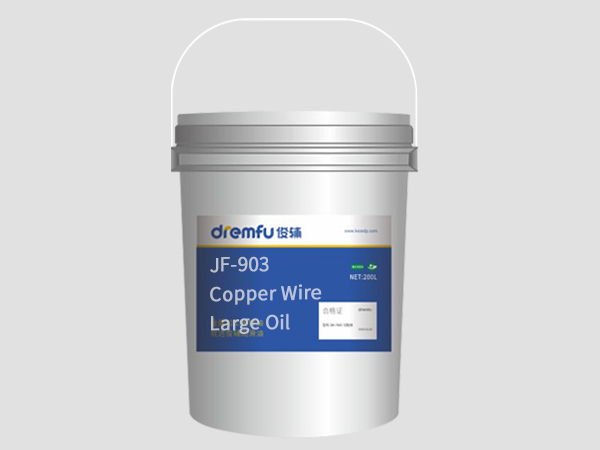
Another important advantage of micro oil is improved penetration.Because micro oil droplets are extremely fine,they can easily reach narrow gaps between the tool and workpiece or inside complex mechanical components.Traditional oil,with its higher flow volume,often fails to penetrate these tight interfaces efficiently.Micro oil,on the other hand,forms a thin,consistent lubricating film that reduces metal-to-metal contact more effectively.
Micro oil also enhances lubrication efficiency by reducing thermal buildup.In machining operations,friction generates heat that can affect dimensional accuracy and surface finish.While traditional oil relies heavily on volume to dissipate heat,micro oil reduces heat generation at the source by minimizing friction itself.This friction-first approach results in more stable machining temperatures and less thermal deformation.
From a tool life perspective,micro oil plays a significant role.Efficient lubrication directly impacts tool wear,especially in high-speed machining and precision cutting.With micro oil,the cutting edge experiences less friction and lower temperatures,leading to slower tool degradation.Many manufacturers report extended tool life and more consistent performance after switching from traditional oil to micro oil lubrication systems.
Oil consumption is another area where micro oil dramatically improves efficiency.Traditional oil systems often consume liters of lubricant per shift,much of which becomes waste.Micro oil systems,by contrast,use only a fraction of that amount.This not only lowers operating costs but also reduces the need for oil disposal,recycling,and machine cleaning.Lower oil usage translates directly into cost savings over time.
Workplace cleanliness is also closely tied to lubrication efficiency.Excess oil mist and splashing from traditional oil systems can contaminate machines,floors,and finished products.Micro oil minimizes airborne oil particles and residue buildup,creating a cleaner and safer working environment.This cleanliness further contributes to operational efficiency by reducing downtime for cleaning and maintenance.
Micro oil lubrication also improves efficiency by supporting automation and smart manufacturing.Modern CNC machines and automated production lines require consistent,predictable lubrication.Micro oil systems can be precisely controlled and synchronized with machine cycles,ensuring consistent lubrication without operator intervention.Traditional oil systems are often less adaptable to automated environments due to their reliance on continuous flow and manual adjustment.
Environmental considerations are another factor driving the adoption of micro oil.Using less lubricant means fewer emissions,less waste oil,and easier compliance with environmental regulations.Many micro oil formulations are designed to be low-volatility and environmentally friendly,making them suitable for manufacturers looking to reduce their environmental footprint without compromising performance.
In terms of overall production efficiency,micro oil offers measurable advantages.Reduced oil consumption,lower maintenance requirements,improved tool life,and cleaner machines all contribute to higher uptime and more predictable production schedules.While traditional oil lubrication remains suitable for certain heavy-duty applications,micro oil has proven to be a more efficient solution for precision machining,high-speed operations,and modern manufacturing environments.
Ultimately,micro oil improves lubrication efficiency not by doing more,but by doing less—less oil,less waste,and less friction.By focusing lubrication exactly where it matters,micro oil provides a smarter,cleaner,and more efficient alternative to traditional oil-based lubrication systems.

Guangdong Junfu Lubrication Technology Co., Ltd. is a private science and technology enterprise integrating independent research and development, production, sales and service.
Copyright © 2026 Guangdong Junfu Lubrication Technology Co., Ltd. All rights reserved.