

 English


Blog

2026-02-16 09:02:02
In metalworking and machining operations,lubrication and cooling are essential for achieving consistent quality and maintaining production efficiency.Among the most common solutions are micro oil and coolant systems.While both play important roles in metalworking,they serve different purposes and are suited to different machining conditions.Understanding the difference between micro oil and coolant is critical for manufacturers looking to optimize performance,cost,and sustainability.
Coolant systems are traditionally used to control temperature during machining.They rely on large volumes of liquid—often water-based emulsions—to flood the cutting zone.The primary function of coolant is heat dissipation.By absorbing and carrying away heat,coolant helps prevent overheating of tools and workpieces,especially in heavy machining operations.
Micro oil,on the other hand,focuses primarily on lubrication rather than cooling through volume.Micro oil systems deliver extremely small amounts of oil directly to the cutting interface,reducing friction at its source.Instead of washing the cutting zone with liquid,micro oil forms a thin lubricating film that minimizes heat generation in the first place.
One major difference between micro oil and coolant lies in how they manage heat.Coolant removes heat after it is generated,while micro oil reduces heat generation by lowering friction.In many precision machining and high-speed cutting applications,reducing friction is often more effective than relying solely on external cooling.This is why micro oil has become increasingly popular in modern CNC machining.
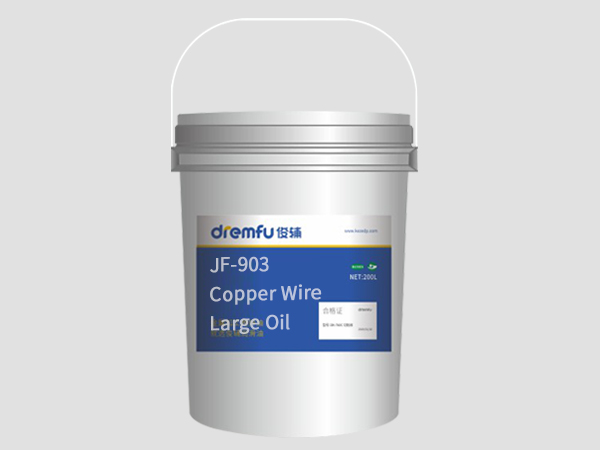
Another key difference is fluid consumption.Coolant systems require continuous circulation of large volumes of fluid,which must be filtered,treated,and eventually replaced.This leads to higher operational costs and complex maintenance routines.Micro oil systems consume significantly less lubricant,often measured in milliliters per hour rather than liters.This dramatic reduction in fluid usage makes micro oil a cost-efficient alternative in suitable applications.
Surface finish and machining quality are also affected differently by micro oil and coolant.Micro oil provides consistent lubrication at the cutting edge,which can result in smoother surfaces and reduced burr formation.Coolant,while effective at cooling,may not always provide optimal lubrication,especially in micro-machining or high-speed applications where fluid penetration is limited.
From an environmental and health perspective,micro oil offers clear advantages.Coolant systems can generate mist,bacteria growth,and disposal challenges,which require careful management to meet safety and environmental standards.Micro oil systems generate minimal mist and waste,improving air quality in the workshop and reducing the environmental impact of machining operations.
Machine maintenance requirements differ significantly between the two systems.Coolant systems require tanks,pumps,filtration units,and regular monitoring to maintain fluid quality.Micro oil systems are simpler,with fewer components and less maintenance.Machines using micro oil often stay cleaner,with less residue buildup and corrosion.
However,it is important to note that micro oil is not a universal replacement for coolant.Heavy-duty machining operations that generate excessive heat,such as deep drilling or large material removal,may still require coolant for effective thermal control.In such cases,coolant’s ability to absorb and remove heat remains essential.
Micro oil is particularly well-suited for applications such as high-speed machining,precision cutting,drilling,tapping,and milling of metals like aluminum,steel,and stainless steel.It is also commonly used in minimal quantity lubrication systems,where efficiency and cleanliness are priorities.
When choosing between micro oil and coolant,manufacturers should consider several factors,including material type,cutting speed,tool geometry,and environmental goals.In many modern workshops,micro oil and coolant are not mutually exclusive but are used strategically depending on the application.
Cost analysis often reveals that micro oil offers long-term savings despite a higher initial system cost.Reduced fluid consumption,lower disposal expenses,less machine downtime,and extended tool life all contribute to a favorable return on investment.Coolant systems,while familiar and effective,may incur hidden costs related to maintenance and waste management.
In summary,the difference between micro oil and coolant in metalworking lies in their core functions and operating principles.Coolant excels at heat removal through volume,while micro oil enhances efficiency by minimizing friction with precision lubrication.As manufacturing continues to evolve toward cleaner,faster,and more precise processes,micro oil is increasingly becoming the preferred solution for many metalworking applications.

Guangdong Junfu Lubrication Technology Co., Ltd. is a private science and technology enterprise integrating independent research and development, production, sales and service.
Copyright © 2026 Guangdong Junfu Lubrication Technology Co., Ltd. All rights reserved.