

 English


Blog

2026-03-02 15:30:25
In plastic injection mold manufacturing,surface gloss is not only a visual requirement but also a direct reflection of machining quality.High-gloss mold cavities reduce polishing workload,improve molded part appearance,and enhance overall production efficiency.While electrode design,EDM parameters,and steel grade are often discussed,the role of EDM Fluid is frequently underestimated.In reality,selecting and managing the right edm fluid can significantly improve surface gloss during EDM machining.
During electrical discharge machining,thousands of micro-sparks remove material from the mold cavity.Each spark generates localized high temperature,melts material,and rapidly cools it.The dielectric medium—edm fluid—controls spark stability,debris removal,and cooling efficiency.If the fluid has poor dielectric strength or contains impurities,unstable discharges occur,leading to rough craters,micro-cracks,and uneven surface texture.This directly affects the final gloss level after polishing.
High-quality edm fluid ensures uniform spark distribution.Stable insulation strength prevents secondary discharge and abnormal arcing,which are major causes of black spots and rough patches on plastic mold cavities.When machining high-gloss molds for consumer electronics,home appliances,or automotive interior parts,consistent spark control becomes critical.Clean and refined edm fluid allows better energy concentration per pulse,producing finer and more uniform discharge marks that are easier to polish into mirror finishes.
Another key factor influencing surface gloss is viscosity.Low-viscosity edm fluid enhances flushing performance,especially in deep ribs and complex cavity geometries commonly found in plastic injection molds.Efficient flushing removes carbon residue and microscopic metal particles from the spark gap.If debris accumulates,it causes unstable discharge,re-solidified layers,and pitting defects.These defects increase polishing time and reduce achievable gloss levels.By maintaining clean spark gaps,the right edm fluid helps create smoother surfaces directly after EDM.
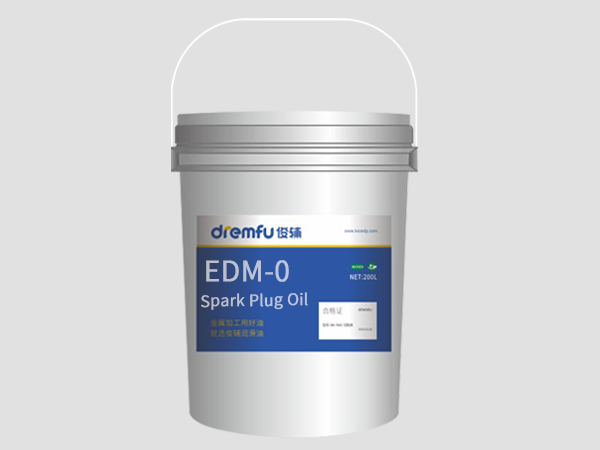
Flash point and thermal stability also play essential roles.Plastic mold EDM often involves long machining cycles.A thermally stable edm fluid resists oxidation and decomposition at high temperatures,preventing sludge formation.Sludge contamination reduces dielectric performance and increases the risk of surface defects.Clean-burning edm fluid leaves minimal carbon residue,which is particularly important for transparent plastic molds where high optical gloss is required.
Surface recast layer thickness is another hidden factor.During EDM,a thin white layer forms due to rapid melting and solidification.Inferior edm fluid may increase the thickness and brittleness of this layer,making polishing more difficult.Premium synthetic or highly refined mineral edm fluid helps control the thermal shock effect and reduces micro-cracking.As a result,the mold surface becomes more uniform and stable,allowing faster transition from EDM finish to mirror polishing.
For mold manufacturers targeting high-gloss finishes such as SPI A-1 or mirror grades,edm fluid cleanliness management is equally important.Even the best dielectric fluid cannot perform well if it is contaminated.Regular filtration,proper tank maintenance,and timely fluid replacement ensure consistent machining conditions.Using fine filtration systems reduces suspended particles that might otherwise scratch the cavity surface during machining.
Electrode wear behavior is also influenced by edm fluid quality.Stable dielectric properties reduce abnormal electrode erosion,leading to more precise geometry replication.Accurate cavity shape means less manual correction and less polishing compensation.For complex plastic mold designs involving fine textures or micro-features,maintaining dimensional stability is critical to preserving gloss uniformity across the surface.
Environmental and workshop conditions should not be ignored.Low-odor and low-smoke edm fluid improves operator comfort and reduces oil mist contamination on machine components.A cleaner environment minimizes secondary contamination of mold surfaces before polishing.Many modern mold factories are shifting toward Synthetic EDM Fluid formulations specifically to balance machining performance with cleaner operations.
Ultimately,improving surface gloss in plastic mold manufacturing is not achieved by polishing alone.It begins at the EDM stage.Selecting the correct edm fluid with high dielectric strength,low viscosity,good oxidation stability,and excellent flushing performance directly reduces surface roughness and defect rates.This leads to shorter polishing cycles,lower labor costs,and higher mold delivery efficiency.
For mold manufacturers serving industries that demand aesthetic perfection—such as consumer electronics housings,medical devices,and automotive interiors—the investment in high-performance edm fluid delivers measurable returns.Better surface quality after EDM means faster polishing,fewer reworks,and higher consistency from cavity to cavity.In a competitive global mold market,controlling such process details can significantly improve profitability and customer satisfaction.

Guangdong Junfu Lubrication Technology Co., Ltd. is a private science and technology enterprise integrating independent research and development, production, sales and service.
Copyright © 2026 Guangdong Junfu Lubrication Technology Co., Ltd. All rights reserved.