

 English


Blog

2026-03-02 15:43:26
Polishing is one of the most labor-intensive and time-consuming stages in plastic mold manufacturing.Achieving mirror finishes or high-gloss surfaces often requires skilled technicians and significant manual effort.Many mold factories focus on polishing techniques,abrasives,and skilled labor,but fewer recognize that polishing efficiency is heavily influenced by what happens earlier during EDM machining.The type and condition of EDM Fluid used during EDM can directly impact mold polishing time.
Electrical discharge machining shapes complex plastic mold cavities that cannot be easily milled.However,EDM inherently leaves a textured surface composed of microscopic craters and a recast layer.The quality of this surface determines how much polishing work is required.If edm fluid performance is poor,the resulting surface may have excessive carbon deposits,unstable discharge marks,and thicker white layers,all of which increase polishing difficulty.
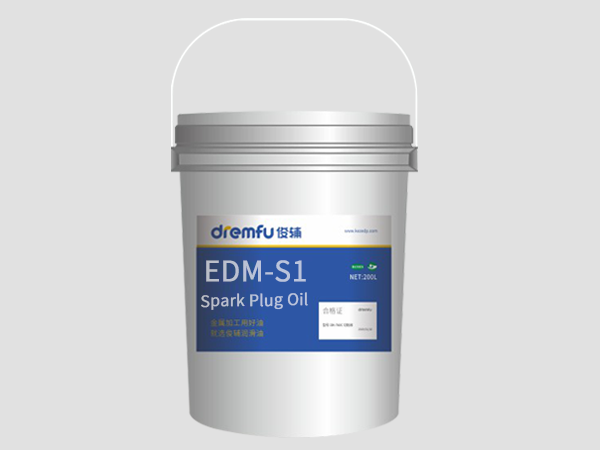
High-quality edm fluid promotes stable spark discharge and efficient debris removal.Stable discharge produces uniform crater distribution with controlled depth.When the surface profile is more consistent,polishing technicians can remove material evenly without spending extra time correcting localized defects.In contrast,contaminated or low-grade edm fluid may cause random arcing and pitting.These surface defects require additional grinding steps before fine polishing can even begin,extending total production time.
One of the most significant ways edm fluid affects polishing time is through carbon residue formation.During EDM,decomposed dielectric fluid can create carbon layers that adhere to the mold surface.If the fluid has poor oxidation stability,carbon buildup becomes more severe.These hardened residues increase polishing resistance and require more aggressive abrasive removal.Using clean-burning,thermally stable edm fluid minimizes carbon adhesion,making the polishing process smoother and faster.
Another factor is the thickness and hardness of the recast layer.The white layer formed after EDM is harder and more brittle than the base mold steel.If the edm fluid does not effectively control discharge energy and cooling speed,the recast layer may become thicker and contain micro-cracks.Removing this layer demands longer polishing cycles and increases the risk of surface distortion.Premium edm fluid helps optimize spark control and cooling,producing thinner and more uniform recast layers that are easier to eliminate.
Flushing performance also plays a critical role.Inadequate flushing due to high-viscosity or contaminated edm fluid allows debris to remain in the spark gap.This can lead to secondary discharge and micro-welded particles on the cavity surface.Such irregularities complicate polishing and require extra manual correction.Low-viscosity edm fluid with strong debris suspension capability ensures cleaner machining surfaces,directly reducing polishing workload.
Consistency across multiple cavities is another economic concern in plastic mold making.Multi-cavity molds demand uniform surface quality to ensure consistent part appearance.If edm fluid performance fluctuates due to poor maintenance,polishing time may vary significantly from cavity to cavity.This unpredictability increases labor costs and delays mold delivery.Maintaining stable edm fluid quality through proper filtration and monitoring ensures predictable polishing duration and smoother production planning.
In high-end applications such as transparent components,optical lenses,or glossy consumer products,polishing standards are extremely strict.Even minor EDM defects can become visible after molding.By investing in high-performance edm fluid,mold manufacturers reduce the depth of surface defects at the source.Less defect removal translates directly into reduced polishing hours.
Cost efficiency should also be considered from a total production perspective.While premium edm fluid may have a higher upfront price compared to conventional dielectric oil,the reduction in polishing time,lower rework rates,and improved mold life often outweigh the difference.Faster polishing turnaround increases machine availability and accelerates mold delivery schedules,strengthening competitiveness in international markets.
In conclusion,edm fluid does more than act as a dielectric medium during machining.It plays a decisive role in determining the surface condition of plastic molds before polishing begins.Stable discharge behavior,minimal carbon residue,thin recast layers,and effective debris flushing all contribute to reduced polishing time.For mold manufacturers aiming to optimize productivity and control labor costs,selecting and maintaining the right edm fluid is not optional—it is a strategic decision that directly impacts operational efficiency and final product quality.

Guangdong Junfu Lubrication Technology Co., Ltd. is a private science and technology enterprise integrating independent research and development, production, sales and service.
Copyright © 2026 Guangdong Junfu Lubrication Technology Co., Ltd. All rights reserved.