

 English


Blog

2026-05-30 14:00:49
In today's competitive manufacturing industry, reducing scrap rates is essential for improving profitability and maintaining product quality. Even small reductions in rejected parts can generate significant cost savings. One often overlooked factor in quality control is the performance of the Cutting Fluid used during machining operations.
This is where Synthetic Cutting Fluid plays a critical role. By providing superior cooling, lubrication, and machining stability, synthetic fluids help manufacturers minimize defects and improve production consistency.
Scrap occurs when finished components fail to meet required specifications and cannot be reworked economically. Common causes include:
Poor surface finish
Dimensional inaccuracies
Tool wear-related defects
Thermal distortion
Burr formation
Workpiece damage
Corrosion issues
Many of these problems can be directly influenced by coolant performance.
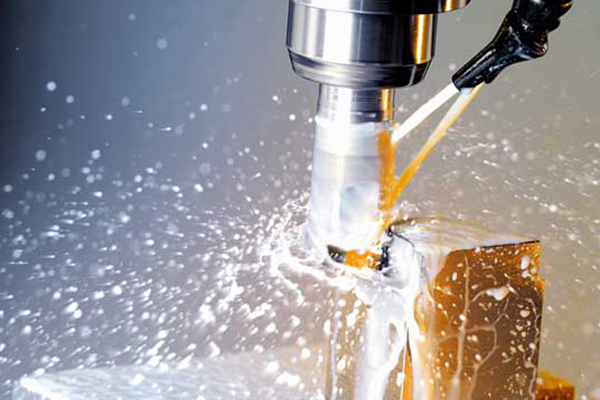
Excessive heat is one of the leading causes of dimensional instability during machining. A high-performance Synthetic Coolant rapidly dissipates heat from the cutting zone, helping maintain tighter tolerances and reducing thermal deformation.
Consistent lubrication provided by Synthetic Machining Fluid reduces friction between cutting tools and workpieces. This results in smoother surfaces and fewer quality defects.
Worn tools often generate poor-quality parts. By reducing friction and operating temperatures, Synthetic Metalworking Fluid helps extend tool life and maintain cutting consistency throughout production runs.
Metal chips left in the cutting area can scratch finished surfaces or interfere with machining accuracy. Synthetic fluids possess excellent flushing capabilities that help remove chips efficiently.
Modern synthetic formulations contain corrosion inhibitors that protect both machine tools and workpieces from rust and oxidation, reducing product rejection caused by surface contamination.
Industries with strict tolerance requirements particularly benefit from synthetic fluid technology.
Automotive parts manufacturing
Aerospace components
Medical device production
Electronic hardware machining
Precision mold manufacturing
Industrial equipment components
These sectors require exceptional consistency, making coolant performance a key factor in quality control.
Fewer defective parts mean less time spent on inspection, correction, and remanufacturing.
When scrap rates decrease, manufacturers consume fewer raw materials to achieve production targets.
Stable machining conditions provided by Synthetic Cutting Fluid reduce process interruptions and improve overall equipment effectiveness.
Many Synthetic Metalworking Fluid products resist bacterial growth and leave fewer residues, resulting in cleaner systems and reduced maintenance requirements.
Monitor coolant concentration regularly
Maintain proper filtration systems
Control coolant contamination
Use recommended dilution ratios
Conduct routine coolant analysis
Select fluids compatible with workpiece materials
These practices help ensure the Synthetic Coolant continues performing at its optimal level.
Reducing scrap rates requires a combination of proper machining practices, quality equipment, and effective coolant management. A high-quality Synthetic Cutting Fluid can significantly improve cooling efficiency, lubrication performance, chip evacuation, and tool life.
Whether referred to as a Synthetic Metalworking Fluid, Synthetic Coolant, or Synthetic Machining Fluid, these advanced formulations help manufacturers produce more consistent parts, lower production costs, and achieve higher levels of operational efficiency.

Dongguan Keze New Materials Co., Ltd. is a private science and technology enterprise integrating independent research and development, production, sales and service.
Copyright © 2026 Dongguan Keze New Materials Co., Ltd. All rights reserved.