

 English


Blog

2026-01-15 18:44:56
In the field of copper wire manufacturing,the performance of copper cable oil is critical to achieving consistent,high-quality wire production.Wire Drawing Oil,or copper Wire Drawing Oil,serves as the primary lubricant during the drawing process,reducing friction between the copper wire and the dies.However,its effectiveness is highly dependent on the operating conditions,particularly temperature and pressure.Understanding how these factors influence copper wire oil performance is essential for manufacturers who aim to maintain efficiency and wire quality while reducing equipment wear.
Copper cable oil functions by forming a thin lubricating film between the wire and the die.This film minimizes direct metal-to-metal contact,reducing friction and heat generation.When the drawing process is carried out under high pressure or elevated temperatures,the properties of the copper Drawing Oil can change.If the oil’s viscosity is not suitable for the specific temperature range,it may become too thin or too thick,compromising lubrication and potentially causing surface defects on the wire.Proper selection of copper wire oil with adequate thermal stability ensures that the lubricant maintains its protective properties under varying production conditions.
Pressure is another crucial factor affecting copper cable oil performance.During wire drawing,the copper wire is subjected to significant mechanical stress as it passes through the dies.High drawing pressure can squeeze the oil film,reducing its thickness and effectiveness.A high-quality copper wire Drawing Oil is engineered to withstand such pressures,maintaining a consistent lubricating layer to prevent die wear and wire surface imperfections.Manufacturers often rely on specially formulated wire drawing oils that combine high-pressure tolerance with excellent lubricity to meet the demands of modern wire production.
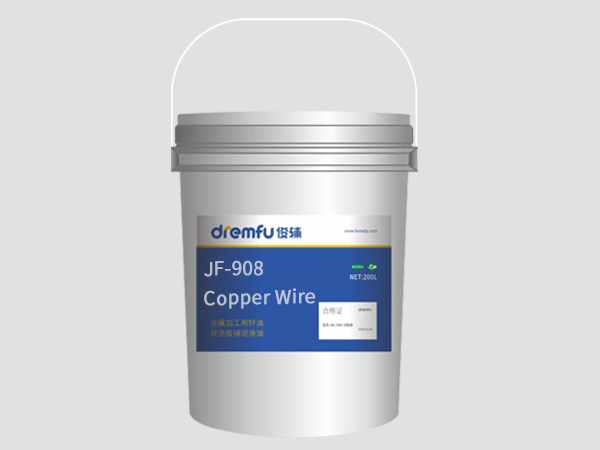
Temperature also plays a key role in the chemical stability of copper cable oil.Excessive heat generated during the drawing process can accelerate the breakdown of the oil,leading to oxidation,increased viscosity,or the formation of residues on the wire surface.These changes can compromise the wire’s surface finish,affect electrical conductivity,and increase the need for cleaning or post-processing.Selecting copper wire oil with strong thermal resistance and low residue characteristics is essential to maintaining production efficiency and wire quality,especially in high-speed or continuous wire drawing operations.
The interaction between temperature and pressure is complex.High temperatures can reduce the oil’s viscosity,while high pressure can compress the lubricant film.If these factors are not properly balanced,the copper drawing oil may fail to provide adequate lubrication,resulting in wire surface scratches,uneven diameters,or even wire breakage.This is why modern wire manufacturers emphasize monitoring operating conditions and choosing copper wire oil that is specifically designed to perform under a wide range of pressures and temperatures.
Advanced copper cable oils often incorporate additives to enhance performance under extreme conditions.Anti-wear additives help protect both the wire and the dies,while antioxidants improve thermal stability and prevent premature oil degradation.Some high-performance copper wire oils also include corrosion inhibitors,ensuring that both the copper wire and the dies remain protected even under challenging environmental conditions.Proper selection of wire drawing oil with these properties can significantly reduce maintenance costs,increase die life,and improve the overall quality of copper wire products.
The consequences of using copper cable oil that is not suited for specific temperature and pressure conditions can be significant.Poorly performing wire drawing oil can increase friction,accelerate die wear,and lead to surface defects that may render copper wires unsuitable for high-end applications.In contrast,using copper wire drawing oil that is engineered for the specific operating environment ensures consistent wire diameter,smooth surface finish,and optimal electrical conductivity.This is particularly important for industries such as telecommunications,electronics,and power transmission,where copper wire performance is critical to product reliability.
Manufacturers can also optimize copper cable oil performance by implementing proper lubrication practices.Maintaining correct oil application rates,monitoring oil condition,and replacing the oil before degradation occurs are essential steps.Regular testing of wire drawing oil properties under production conditions helps ensure that the copper wire oil continues to provide reliable lubrication,even as temperature and pressure fluctuate.
In conclusion,the performance of copper cable oil is heavily influenced by temperature and pressure during the wire drawing process.Selecting high-quality wire drawing oil with excellent thermal stability,high-pressure tolerance,and anti-wear properties is essential for consistent copper wire quality and efficient production.By understanding and managing these critical factors,manufacturers can reduce production defects,extend the life of their dies,and produce high-performance copper wire suitable for demanding applications.Proper copper wire oil management is not just a matter of lubrication—it is a key component in achieving excellence in modern wire production.

Guangdong Junfu Lubrication Technology Co., Ltd. is a private science and technology enterprise integrating independent research and development, production, sales and service.
Copyright © 2026 Guangdong Junfu Lubrication Technology Co., Ltd. All rights reserved.