

 English


Blog

2026-01-21 09:52:01
Stainless steel is widely used in industries such as automotive, aerospace, medical devices, and industrial equipment due to its strength, corrosion resistance, and durability. However, these same properties also make stainless steel one of the most challenging materials to machine. Excessive heat generation during machining is a common issue, leading to rapid tool wear, poor surface finish, work hardening, and even dimensional inaccuracies. One of the most effective ways to control heat is selecting and using the right Cutting Oil for stainless steel.
During machining, heat is mainly generated by friction between the cutting tool and the workpiece, as well as plastic deformation of the metal at the cutting zone. Stainless steel has low thermal conductivity, meaning heat does not dissipate quickly and instead concentrates around the cutting edge. Without proper lubrication and cooling, temperatures can rise rapidly, reducing productivity and increasing manufacturing costs.
A high-quality Cutting Oil for stainless steel plays a critical role in heat reduction by providing effective lubrication at the tool–chip interface. Unlike water-based coolants, Cutting Oils form a strong lubricating film that reduces direct metal-to-metal contact. This minimizes friction, lowers cutting forces, and significantly decreases the amount of heat generated during machining operations such as turning, milling, drilling, and tapping.
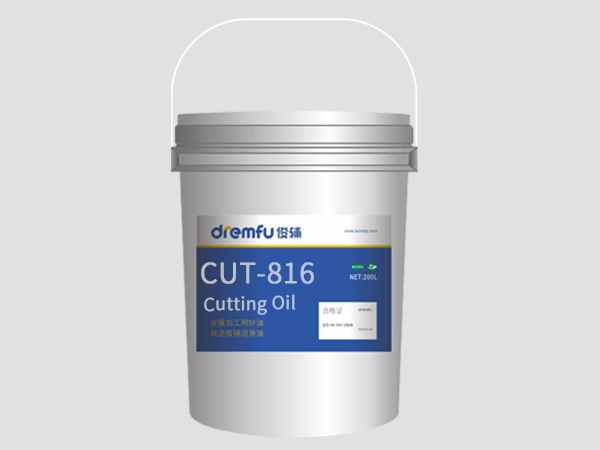
Another important factor is the oil’s ability to withstand extreme pressure. Stainless steel machining often involves high loads, especially during low-speed or heavy-cut operations. Cutting Oils formulated with extreme-pressure (EP) additives, such as sulfurized or phosphorus compounds, react chemically with the metal surface at high temperatures to form a protective boundary layer. This layer reduces welding and galling between the tool and workpiece, preventing sudden temperature spikes and tool failure.
Viscosity also influences heat control. A cutting oil that is too thin may not provide sufficient lubrication, while one that is too thick may not flow effectively into the cutting zone. The ideal cutting oil for stainless steel should have balanced viscosity, allowing it to penetrate the tool–chip interface while maintaining a stable lubricating film under pressure. This balance helps stabilize cutting temperatures and ensures consistent machining performance.
Proper application of cutting oil is just as important as oil selection. Delivering the oil directly to the cutting zone ensures maximum heat reduction. Inadequate flow or poor targeting can leave critical areas dry, resulting in localized overheating. Many manufacturers use flood application or high-pressure delivery systems to ensure the cutting oil reaches the hottest areas, especially in deep-hole drilling or complex CNC machining.
Machining parameters also interact closely with cutting oil performance. Excessive cutting speed can overwhelm even the best cutting oil, while too low a speed may increase friction and heat due to prolonged tool contact. Optimizing speed, feed rate, and depth of cut, combined with a suitable cutting oil for stainless steel, helps maintain a stable thermal environment. This balanced approach reduces thermal stress on tools and workpieces alike.
Another often overlooked benefit of cutting oil is its role in chip evacuation. Poor chip removal can cause chips to rub against the tool or workpiece, generating additional heat. A well-formulated cutting oil improves chip flow by reducing adhesion and friction, allowing chips to break and evacuate smoothly. This not only lowers heat but also improves overall machining efficiency.
Environmental and operator safety considerations are increasingly important in modern manufacturing. Many advanced cutting oils for stainless steel are now formulated to be low-odor and low-mist, reducing air contamination while maintaining excellent thermal control. Chlorine-free and environmentally friendly formulations can still deliver strong heat reduction performance when designed correctly.
In summary, reducing heat when machining stainless steel is not about a single solution but a combination of proper oil selection, correct application, and optimized machining parameters. Using a high-performance cutting oil for stainless steel with excellent lubricity, extreme-pressure resistance, and thermal stability can dramatically reduce heat generation. This leads to longer tool life, improved machining stability, better surface quality, and lower overall production costs. For manufacturers seeking consistent results in stainless steel machining, investing in the right cutting oil is a critical step toward process optimization.

Guangdong Junfu Lubrication Technology Co., Ltd. is a private science and technology enterprise integrating independent research and development, production, sales and service.
Copyright © 2026 Guangdong Junfu Lubrication Technology Co., Ltd. All rights reserved.