

 English


Blog

2026-01-21 09:54:14
Achieving a high-quality surface finish when machining stainless steel is a key requirement for many industries, especially in applications where appearance, precision, and performance matter. Stainless steel’s tendency to work harden, combined with its toughness and poor thermal conductivity, makes surface finish control particularly challenging. One of the most effective and reliable methods to improve surface finish is the correct use of Cutting Oil for stainless steel.
Surface finish is directly influenced by friction at the cutting interface. When friction is high, the cutting tool tends to drag across the material instead of slicing cleanly, leading to rough surfaces, tearing, and micro-burrs. Cutting Oil reduces this friction by forming a lubricating film between the tool and the workpiece, allowing smoother cutting action. As a result, the machined surface becomes more uniform, with reduced tool marks and improved dimensional consistency.
Stainless steel is also prone to built-up edge formation, where material adheres to the cutting tool edge. This phenomenon causes irregular cutting and surface defects, such as scratches and chatter marks. A well-formulated Cutting Oil for stainless steel contains additives that prevent metal adhesion and reduce chemical affinity between the tool and the workpiece. By minimizing built-up edge, cutting oil helps maintain a sharp cutting edge, which is essential for producing a smooth surface finish.
Heat control plays a crucial role in surface quality. Excessive heat can soften the material at the cutting zone, causing smearing and deformation rather than clean shearing. Cutting oil contributes to thermal stability by reducing friction-generated heat and carrying heat away from the cutting area. When temperatures remain stable, the cutting process becomes more predictable, leading to improved surface consistency across multiple parts.
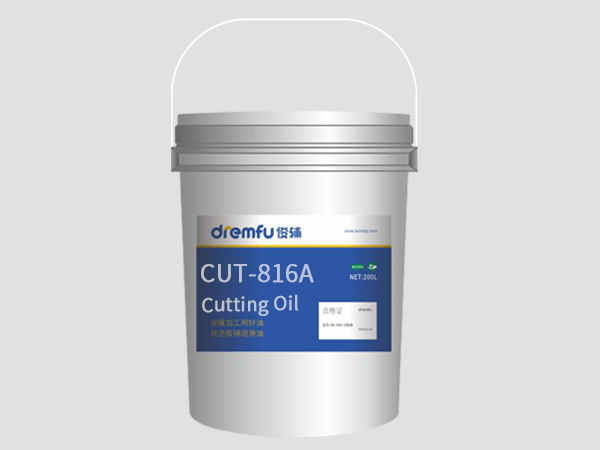
The choice of cutting oil formulation also affects surface finish. Oils with strong boundary lubrication properties are particularly effective in finishing operations. These oils maintain lubrication even under high pressure and low speed, conditions commonly encountered in stainless steel finishing passes. This ensures a smooth interaction between tool and material, producing finer surface textures.
Application method significantly impacts results. Consistent delivery of cutting oil to the cutting zone ensures continuous lubrication throughout the operation. In CNC machining, precise oil application reduces vibration and chatter, both of which can degrade surface finish. When the cutting oil for stainless steel reaches the exact point of contact, it stabilizes the cutting process and enhances surface quality.
Tool life and surface finish are closely connected. Worn or overheated tools tend to produce rough surfaces. By reducing wear and preventing premature tool degradation, cutting oil indirectly improves surface finish over extended production runs. This consistency is especially important in mass production environments where surface quality must remain uniform from the first part to the last.
Another advantage of using cutting oil is improved chip control. Poorly controlled chips can scratch the freshly machined surface as they are evacuated. Cutting oil reduces chip adhesion and improves chip breakage, allowing chips to flow away smoothly without damaging the surface. This contributes to cleaner finishes and reduces the need for secondary polishing or finishing processes.
Modern manufacturers also consider post-machining cleanliness. High-quality Cutting Oils are designed to leave minimal residue, making parts easier to clean without compromising surface appearance. This is particularly beneficial in industries such as medical devices or food equipment, where surface integrity and cleanliness are critical.
Ultimately, improving surface finish on stainless steel is a combination of selecting the right tooling, optimizing machining parameters, and using a high-performance cutting oil for stainless steel. When the cutting oil provides excellent lubrication, heat control, and anti-adhesion properties, it enables smoother cutting action and more consistent results. For manufacturers aiming to enhance product quality, reduce rework, and meet demanding surface requirements, the correct cutting oil is not just an accessory—it is a vital component of the machining process.

Guangdong Junfu Lubrication Technology Co., Ltd. is a private science and technology enterprise integrating independent research and development, production, sales and service.
Copyright © 2026 Guangdong Junfu Lubrication Technology Co., Ltd. All rights reserved.