

 English


Blog

2026-08-14 14:49:48
Drawing Oil (also called stamping oil or Stretching Oil) is a lubricant used during metal stamping and forming processes such as deep drawing, stretching, punching, and bending. It reduces friction between the metal sheet and the die, preventing tearing, cracking, and surface defects while protecting tooling from wear. Manufacturers choose between oil-based, water-based, and volatile (VOC-free) formulations depending on the material, process difficulty, and post-production cleaning requirements. This guide explains what Drawing Oil is, how it works, and which type fits different stamping applications.
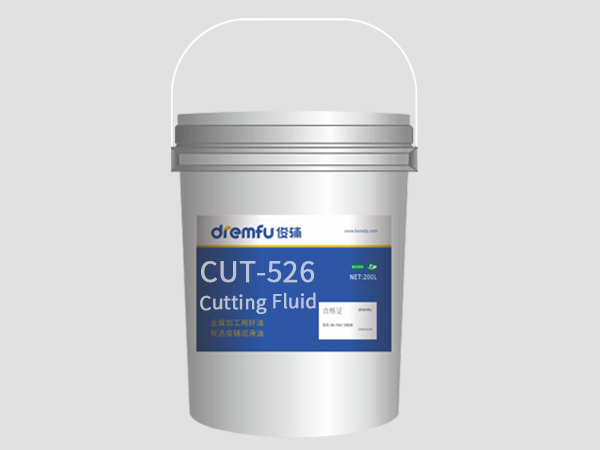
During metal stamping, the sheet metal slides against the die surface under high pressure as it's formed into shape. Without adequate lubrication, this friction generates heat, accelerates die wear, and can cause the metal to tear, wrinkle, or gall (stick and score) against the tooling. Drawing oil forms a thin protective film between the metal and the die, allowing the sheet to flow smoothly through the forming process while dissipating heat and reducing tool wear.
Reduces friction and heat buildup at the metal-die interface
Prevents drawing defects such as tearing, cracking, and wrinkling
Protects dies and molds from premature wear
Improves surface finish and dimensional consistency of the finished part
Formulated with extreme pressure additives for strong lubrication under heavy loads, oil-based drawing oil is well suited to demanding deep-draw operations and harder-to-form materials. It offers strong film strength but generally requires a cleaning step before subsequent processes such as welding, painting, or coating.
Diluted with water and easy to rinse off, water-based drawing oil is favored where post-forming cleanup needs to be fast and low-cost. It's commonly used across stainless steel, aluminum, and cold-rolled steel forming, particularly where residue-free surfaces are required downstream.
Volatile stamping oil evaporates after the forming process, eliminating the need for a separate cleaning step entirely. This makes it a practical choice for high-volume production lines where minimizing downtime and avoiding wastewater treatment matters, though its lubrication film is generally lighter than oil-based formulations.
Not sure which type fits your stamping process? Send us your material, part geometry, and cleaning requirements, and our team can recommend a formulation within 24 hours.
Drawing oil supports a wide range of metal forming operations across industries that rely on precision stamped components:
Deep drawing and stretching of sheet metal parts
Punching, perforating, and bending operations
Pipe bending and rolling processes
Applications spanning automotive, home appliance, kitchenware, electronics, aerospace, and new energy manufacturing
For a closer look at how the right drawing oil affects production output, see our guide on how drawing oil improves sheet metal forming efficiency. If you're deciding between water-soluble and neat oil formulations for wire or sheet applications, our comparison on water-soluble drawing oil vs. neat oil breaks down the performance trade-offs.
Selecting drawing oil isn't one-size-fits-all — the right formulation depends on several factors specific to your process:
Material: stainless steel, aluminum, copper, and cold-rolled steel each respond differently to lubrication film strength
Process difficulty: deep draws and complex geometries generally require stronger extreme-pressure lubrication than simple bends
Cleaning requirements: parts headed for welding, painting, or coating need oil that cleans off easily or evaporates on its own
Production volume: high-volume lines often benefit from volatile oils that skip the cleaning step entirely
Ready to get a formulation recommendation for your specific stamping process? Tell us your material, forming operation, and target output, and we'll respond with a tailored proposal within one business day.
Drawing oil is used to lubricate the interface between sheet metal and dies during stamping, deep drawing, stretching, and bending operations. It reduces friction and heat, preventing tearing, cracking, and surface defects while protecting tooling from wear.
The terms are largely interchangeable in industry use — both refer to lubricants applied during metal forming processes. "Drawing oil" is more often associated with deep-draw and stretching operations specifically, while "stamping oil" is used more broadly across punching, bending, and forming processes.
Water-based drawing oils can often be filtered and reused for a period before contamination levels require replacement. Oil-based formulations are typically monitored for viscosity and contamination and replaced according to supplier maintenance guidelines. Volatile stamping oils are not reused, since they're designed to evaporate after the forming process.
Yes, in most cases. Oil-based and water-based drawing oils generally require a cleaning step before welding, painting, or coating to ensure proper adhesion and weld quality. Volatile stamping oils are formulated to evaporate on their own, which can eliminate this step depending on the application.

Dongguan Keze New Materials Co., Ltd. is a private science and technology enterprise integrating independent research and development, production, sales and service.
Copyright © 2026 Guangdong Junfu Lubrication Technology Co., Ltd. All rights reserved.