

 English


Blog

2026-08-26 23:01:52
In the wire drawing industry, choosing the right lubricant is essential for improving production efficiency, reducing friction, and maintaining wire surface quality. Two common types of drawing lubricants are oil based drawing lubricant and water based drawing lubricant.
Although both are designed to reduce friction during the wire drawing process, they have different formulations, performance characteristics, and application advantages. Understanding the difference between oil based and water based drawing lubricant can help manufacturers select the most suitable solution for their production requirements.
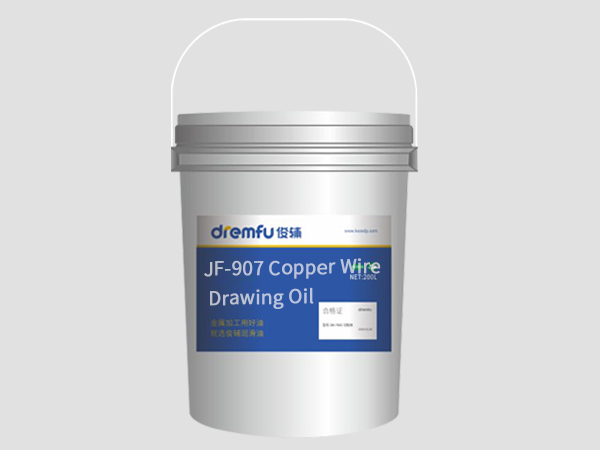
Drawing lubricant is a specialized lubricant used in metal forming processes, especially wire drawing. During wire drawing, metal wire is pulled through a series of dies to reduce its diameter and achieve the required shape and surface finish.
The drawing process generates significant friction and heat between the wire and drawing dies. A suitable lubricant creates a protective film that reduces direct contact, lowers friction, improves cooling, and helps prevent wire surface defects.
Common drawing lubricants include:
Oil based drawing lubricant
Water based drawing lubricant
Synthetic drawing lubricant
Dry drawing lubricant
Among them, oil based and water based drawing lubricants are widely used in Copper Wire, steel wire, aluminum wire, and other metal wire production.
Oil based drawing lubricant is a lubricant that uses mineral oil, synthetic oil, or other oil-based materials as its main component.
It provides excellent lubrication performance because oil has strong film-forming properties. During the wire drawing process, the oil film separates the metal surface from the drawing die, reducing friction and minimizing wear.
Oil based drawing lubricants are commonly used in applications that require:
High lubrication performance
Heavy-duty wire drawing
High-pressure forming conditions
Excellent surface protection
They are especially suitable for processes where reducing die wear and maintaining smooth wire surfaces are important.
Water based drawing lubricant uses water as the primary carrier, combined with additives such as lubricating agents, corrosion inhibitors, and cooling components.
Unlike oil based lubricants, water based drawing lubricants provide better cooling performance because water can absorb and transfer heat more efficiently.
They are often used in high-speed wire drawing operations where temperature control is critical.
Advantages of water based drawing lubricants include:
Better heat dissipation
Cleaner working environment
Easier cleaning after processing
Lower oil residue on wire surfaces
The main difference between oil based and water based drawing lubricant is lubrication ability.
Oil based drawing lubricants generally provide stronger lubricating films, making them suitable for high-pressure applications where friction reduction is the priority.
Water based drawing lubricants also provide effective lubrication but rely more on additives and formulation technology to achieve similar performance.
For heavy wire drawing or demanding forming conditions, oil based lubricants are often preferred.
Cooling ability is another important difference.
Oil based lubricants have limited heat transfer capability compared with water based solutions. During high-speed drawing, heat accumulation may become a concern.
Water based drawing lubricants offer better cooling performance because water has higher heat absorption capacity. They are suitable for high-speed production lines where temperature control is required.
Water based drawing lubricants usually leave less oily residue on wire surfaces.
This makes them suitable for applications where cleaning requirements are strict, such as:
Electrical wire production
Fine copper wire manufacturing
Electronic component applications
Oil based lubricants may leave an oil film that provides additional protection but may require further cleaning before downstream processing.
Oil based drawing lubricants are generally easier to maintain because they provide stable lubrication and good corrosion protection.
Water based drawing lubricants require proper concentration control and maintenance because changes in water quality, contamination, or additive levels can affect performance.
Regular monitoring is important to maintain consistent drawing results.
Water based drawing lubricants are often considered more environmentally friendly because they contain less oil content and produce fewer oily residues.
They can help reduce workplace oil contamination and improve operating conditions.
However, oil based drawing lubricants may offer longer service life and better performance in some demanding industrial applications.
There is no single best option between oil based and water based drawing lubricant. The right choice depends on production conditions, wire material, drawing speed, and quality requirements.
For copper wire drawing, manufacturers should consider:
Copper wire diameter
Drawing speed
Number of drawing passes
Required surface finish
Cooling requirements
Cleaning process after drawing
Oil based drawing lubricants are commonly selected for applications requiring strong lubrication and excellent die protection.
Water based drawing lubricants are often chosen for high-speed production where cooling performance and surface cleanliness are important.
Before selecting a drawing lubricant, manufacturers should evaluate the following factors:
High-speed wire drawing generates more heat, making cooling performance an important consideration.
Different metals, including copper, aluminum, and steel, may require different lubricant formulations.
If the final product requires a clean and smooth surface, water based drawing lubricant may be more suitable.
The drawing machine design and lubrication system can influence lubricant selection.
Manufacturers should consider lubricant lifespan, filtration requirements, and operating costs.
The difference between oil based and water based drawing lubricant mainly lies in their formulation, lubrication performance, cooling ability, and application requirements.
Oil based drawing lubricants provide excellent lubrication and wear protection, making them suitable for heavy-duty wire drawing applications. Water based drawing lubricants offer better cooling performance, cleaner operation, and are suitable for high-speed production processes.
For manufacturers involved in copper wire drawing and metal wire production, selecting the right drawing lubricant can improve wire quality, extend die life, and increase overall production efficiency.
Choosing between oil based and water based drawing lubricant should always be based on the specific drawing process, equipment conditions, and final product requirements.

Dongguan Keze New Materials Co., Ltd. is a private science and technology enterprise integrating independent research and development, production, sales and service.
Copyright © 2026 Guangdong Junfu Lubrication Technology Co., Ltd. All rights reserved.