

 English


Blog

2026-08-22 14:36:09
Choosing between conventional, mirror-finish, and synthetic EDM Fluid comes down to matching viscosity and flash point to the surface finish your job actually requires — not just picking whichever oil is cheapest or most commonly stocked. The three tiers differ most in viscosity, which directly affects how well the fluid flushes debris out of a small spark gap and how fine a finish it can support.
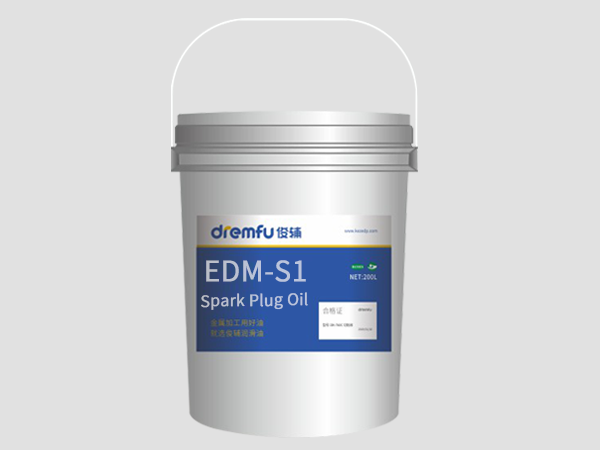
Conventional EDM fluid is commonly rated with a flash point above 105°C and a kinematic viscosity around 4.5 mm²/s at 40°C, with zero aromatic hydrocarbon content and an acid value under 0.05 mgKOH/g. This tier is suitable for general-purpose work across most EDM machine types, including standard super-finishing operations. If your work doesn't require the finest achievable surface quality, conventional edm fluid is generally the more cost-effective default rather than reaching for a mirror-finish or synthetic product by habit.
Mirror-finish EDM fluid runs a noticeably lower viscosity — around 2.5 mm²/s at 40°C — with a flash point above 110°C, zero aromatic content, and the same acid value ceiling as conventional fluid. It's positioned for ultra-fine spark erosion work on steel, stainless steel, carbide, and titanium, aiming at mirror-grade surface quality. Note that the manufacturer doesn't publish a quantified Ra surface roughness value alongside this claim, so if a specific finish specification matters for your part, ask your supplier to confirm achievable roughness for your exact material and machine setup rather than relying on "mirror-grade" as a standalone spec.
Synthetic EDM fluid runs the lowest viscosity of the three tiers at 2.2 mm²/s or above at 40°C, with a flash point around 106°C, aromatic hydrocarbon content at 20 PPM or below, sulfur content under 0.01 mg/kg, and a pour point around -55°C. That low pour point gives it an advantage in cold storage or cold-climate shop conditions where conventional or mirror-finish fluid might thicken. It's positioned for ultra-precision machining applications across various EDM equipment types.
Viscosity is the clearest measurable difference across these three tiers — roughly 4.5 mm²/s for conventional, 2.5 mm²/s for mirror-finish, and 2.2 mm²/s or below for synthetic. Lower viscosity generally supports better debris flushing at small spark gaps, which is part of why the finer-finish tiers run thinner. That said, viscosity alone doesn't guarantee a specific surface outcome — your machine settings, electrode material, and workpiece material all factor in, so treat viscosity as one input into the decision rather than the only one.
All three tiers carry flash points in a similar 105-110°C range, which is a standard safety consideration for EDM fluid storage and handling rather than a differentiator between tiers. Ask your supplier for the test method and documentation (these are commonly tested per GB/T 261 Open Cup) tied to the specific product you're ordering, particularly if your facility has its own fire safety documentation requirements.
This guide focuses on choosing by finish tier and viscosity. If your decision is more about mineral-based versus synthetic base oil chemistry — cost, environmental handling, and long-term stability — see our mineral-based vs synthetic dielectric fluid comparison for that specific angle.
Does your job require general-purpose finishing, or a documented mirror-grade or ultra-precision result?
Can the supplier confirm achievable Ra surface roughness for your specific material and machine, not just a general "mirror-grade" claim?
What viscosity and flash point apply to the exact product you're ordering, tested per which standard?
Does your shop's storage environment call for a lower pour point fluid like the synthetic tier?
Is the fluid validated for your specific EDM machine type and electrode material?
If you know your finishing requirement and machine type, send them directly for a recommendation.
The three tiers differ mainly in viscosity, which affects debris flushing and achievable surface finish. Conventional fluid runs around 4.5 mm²/s and suits general-purpose work, mirror-finish fluid runs thinner at around 2.5 mm²/s for ultra-fine work, and synthetic fluid runs the lowest viscosity along with a very low pour point for cold-storage conditions.
Mirror-finish EDM fluid is positioned for the finest surface quality, particularly on steel, stainless steel, carbide, and titanium. Ask your supplier for documented Ra roughness values for your specific material and setup rather than relying on the "mirror-grade" label alone.
Synthetic EDM fluid isn't universally "better" — it's suited to ultra-precision applications and cold-storage environments due to its low viscosity and very low pour point. For general-purpose spark erosion work, conventional EDM fluid is often the more cost-effective choice.
EDM fluid across these tiers is commonly rated in the 105-110°C range. Confirm the specific flash point and test method for your exact product, especially if your facility has its own fire safety documentation requirements.

Dongguan Keze New Materials Co., Ltd. is a private science and technology enterprise integrating independent research and development, production, sales and service.
Copyright © 2026 Guangdong Junfu Lubrication Technology Co., Ltd. All rights reserved.