

 English


Blog

2026-09-08 09:03:03
Aluminum wire Drawing Oil plays an important role in the wire drawing process by reducing friction, controlling heat, protecting the drawing die, and improving the surface quality of the finished wire. However, Drawing Oil does not last indefinitely. During continuous production, the lubricant is exposed to metal particles, heat, oxidation, moisture, and other contaminants that gradually reduce its performance.
So, how often should aluminum Wire Drawing Oil be replaced? There is no single replacement interval that applies to every wire drawing operation. In practice, the replacement frequency depends on the type of lubricant, aluminum alloy, wire diameter, drawing speed, die configuration, operating temperature, filtration system, and overall production conditions. Instead of changing the oil only according to a fixed calendar, manufacturers should monitor its condition and replace it when its performance begins to decline.
The aluminum wire drawing process reduces the diameter of a wire by pulling it through a drawing die. As the aluminum wire passes through the die, substantial contact pressure and friction are generated between the wire surface and the die bearing.
Drawing oil forms a lubricating film between these surfaces. Depending on the formulation and operating conditions, the lubricant can work through boundary lubrication, mixed lubrication, or hydrodynamic lubrication.
The main functions of aluminum wire drawing oil include:
Reducing friction between the wire and drawing die
Controlling heat generated during deformation
Reducing die wear
Preventing excessive aluminum pickup on the die
Improving wire surface finish
Helping maintain stable drawing tension
Reducing the possibility of wire breakage
Carrying away metal fines and contaminants when combined with filtration
During drawing, the lubricant also helps control the temperature of both the wire and tooling. This is particularly important in high-speed wire drawing, where excessive heat can accelerate lubricant degradation and affect the surface condition of the aluminum wire.
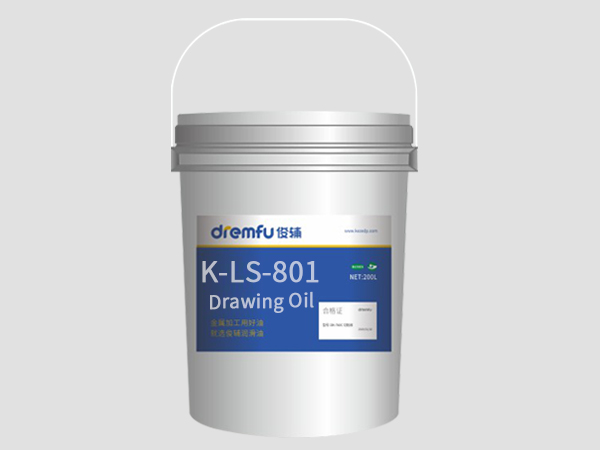
The formulation of aluminum wire drawing oil varies according to the drawing process and application. A typical lubricant may contain a base oil or carrier fluid combined with performance additives.
Common formulation components may include mineral oil, synthetic base fluids, fatty compounds, extreme-pressure additives, anti-wear additives, corrosion inhibitors, antioxidants, and other specialized components.
For aluminum wire drawing, lubricant selection is particularly important because aluminum has different tribological characteristics from materials such as steel or copper. Aluminum is relatively soft and can be susceptible to adhesive wear and material transfer under unsuitable lubrication conditions.
A properly formulated lubricant therefore needs to maintain an effective lubricating film while minimizing aluminum buildup on the drawing die.
The formulation may also be adjusted according to wire diameter, alloy composition, drawing reduction, drawing speed, and required surface quality.
The manufacturing process of drawing oil generally begins with the selection and preparation of the base fluid. The base oil determines important characteristics such as viscosity, thermal stability, lubricity, and oxidation resistance.
Selected additives are then introduced according to the formulation. Depending on the lubricant system, the production process can involve controlled heating, mixing, homogenization, filtration, and quality testing.
The manufacturing process needs to maintain consistent additive dispersion and formulation stability. Important quality parameters may include viscosity, flash point, oxidation stability, acid value, moisture content, and lubricating performance.
For industrial applications, formulation consistency is particularly important because changes in lubricant properties can influence friction, drawing force, surface finish, die wear, and overall process stability.
The replacement interval can vary considerably between production lines. Some operations may require relatively frequent replacement, while others can extend lubricant life through effective filtration, temperature control, and regular maintenance.
As a general principle, aluminum wire drawing oil should be replaced when its physical or chemical condition has deteriorated enough to affect the drawing process.
Instead of relying only on a fixed replacement schedule, manufacturers can monitor several indicators.
A gradual change in color does not necessarily mean that the lubricant must be replaced. However, a significant darkening, unusual deposits, sludge, or visible contamination can indicate oxidation or accumulation of drawing debris.
Aluminum fines generated during the drawing process can enter the lubricant. If these particles are not effectively removed, they may circulate through the system and contribute to surface defects or equipment wear.
Viscosity is an important property of drawing oil because it influences lubricant film formation and fluid flow.
As the oil ages, oxidation, contamination, and thermal degradation can change its viscosity. Excessively high viscosity may affect circulation and filtration, while excessively low viscosity can reduce the ability of the lubricant to maintain an adequate film under certain operating conditions.
A significant deviation from the lubricant's original viscosity specification can therefore be a useful indicator for oil-condition monitoring.
Foaming can interfere with lubrication and cooling and may reduce the stability of the drawing process.
Persistent foam may result from contamination, unsuitable additive balance, excessive agitation, or changes in the lubricant condition. If foaming continues despite correcting operating conditions, the drawing oil should be inspected and potentially replaced.
One of the most important signs is a change in actual drawing performance.
If the drawing force increases, the wire surface becomes rougher, aluminum pickup appears on the die, or wire breakage becomes more frequent, lubricant deterioration may be one of the contributing factors.
However, these symptoms can also result from worn dies, incorrect reduction ratios, excessive drawing speed, improper cooling, or unsuitable process parameters. Therefore, lubricant condition should be evaluated together with the entire drawing system.
Metal fines and other particles accumulate in drawing oil over time. A filtration system can significantly extend lubricant service life by removing these contaminants.
When contamination exceeds the filtration system's effective capacity, the oil may become unsuitable for continued use.
For this reason, monitoring particle contamination and maintaining the filtration system can be just as important as monitoring the oil itself.
Several production variables determine how quickly aluminum wire drawing oil deteriorates.
Drawing speed: Higher drawing speeds generally generate more heat and can increase lubricant stress.
Wire diameter: Fine wire drawing may involve different lubrication requirements from heavy-gauge wire drawing.
Reduction ratio: A greater reduction per pass can increase deformation and friction, placing additional demands on the lubricant.
Aluminum alloy: Different alloy compositions can have different mechanical and tribological characteristics, affecting lubrication requirements.
Die material and geometry: Tungsten carbide, polycrystalline diamond, and other die materials interact differently with the lubricant and wire.
Operating temperature: Excessive temperature can accelerate oxidation and thermal degradation.
Filtration: Effective filtration removes metal fines and other contaminants, helping extend lubricant service life.
Water and moisture contamination: In systems susceptible to moisture contamination, water can alter lubricant performance and contribute to corrosion or instability.
Because these factors vary from one production line to another, replacing drawing oil every fixed number of days or months is not always the most effective maintenance strategy.
Maintaining the lubricant in good condition can provide several process benefits.
First, effective lubrication reduces friction between the aluminum wire and drawing die. Lower friction can help reduce drawing force and heat generation.
Second, good lubricant condition can help minimize die wear and aluminum pickup. This is especially important when producing wire with demanding dimensional and surface-finish requirements.
Third, stable lubrication contributes to consistent wire quality. Problems such as scratches, surface deposits, uneven finish, and wire breakage can become more likely when lubrication conditions deteriorate.
Finally, extending lubricant service life through filtration and condition monitoring can reduce unnecessary oil consumption and production interruptions.
Continuing to use severely degraded drawing oil can create several problems.
Oxidized or contaminated oil may provide weaker lubrication and less effective heat control. Accumulated metal particles can increase contamination within the lubrication system and potentially contribute to surface defects.
Degraded lubricant can also increase the risk of aluminum pickup on the drawing die. Once buildup occurs, the die surface may become less effective, which can further affect wire quality.
In severe cases, poor lubrication can contribute to higher drawing forces, unstable production, excessive die wear, and increased wire breakage.
Therefore, using oil for too long simply to reduce lubricant consumption can eventually increase maintenance and production costs.
Yes, in many industrial systems, drawing oil can be reused if its condition remains within the required operating range.
Oil filtration is one of the most common methods used to extend lubricant service life. Filtration can remove aluminum fines, dust, and other solid contaminants from the circulating lubricant.
However, filtration cannot reverse every type of lubricant degradation. Oxidation, additive depletion, chemical changes, and excessive moisture may continue even when solid particles are effectively removed.
For this reason, reused drawing oil should be evaluated through regular condition monitoring rather than being circulated indefinitely.
Depending on the production environment, manufacturers may monitor viscosity, appearance, contamination, moisture, acidity, and other relevant parameters.
Aluminum wire drawing oil is used in various wire manufacturing operations, including electrical wire, cable production, aluminum conductor manufacturing, and other applications where aluminum wire must be reduced to a specific diameter.
In electrical applications, surface quality and dimensional consistency are particularly important. The lubricant must support stable drawing while avoiding excessive residue that could interfere with subsequent processes such as cleaning, annealing, stranding, or coating.
For fine aluminum wire, lubrication becomes even more important because the wire has a smaller cross-sectional area and can be more sensitive to surface defects and drawing instability.
Different applications may therefore require different lubricant formulations and operating parameters rather than a single universal drawing oil.
The most effective approach is not simply to use the oil for as long as possible. Instead, manufacturers should control the factors that accelerate lubricant degradation.
Regular filtration can remove metal particles before they accumulate. Maintaining appropriate operating temperatures can reduce thermal stress on the lubricant. Preventing water and foreign contaminants from entering the lubrication system can also improve oil stability.
The drawing equipment should also be inspected regularly. Worn dies, incorrect die alignment, excessive drawing reduction, and unsuitable drawing speeds can place additional stress on the lubricant and create symptoms that may otherwise be mistaken for oil failure.
A practical maintenance program should therefore combine oil-condition monitoring with inspection of the drawing dies, filtration equipment, cooling system, and process parameters.
There is no universal answer to how often aluminum wire drawing oil should be replaced. The appropriate replacement interval depends on lubricant formulation, aluminum alloy, wire diameter, drawing speed, reduction ratio, operating temperature, contamination level, filtration efficiency, and other process conditions.
Rather than changing the oil solely according to a fixed schedule, manufacturers should monitor its viscosity, appearance, contamination, foaming, lubrication performance, and other relevant properties. When the oil can no longer maintain stable lubrication and process performance, replacement or partial renewal should be considered.
Proper lubricant selection, filtration, temperature control, and regular condition monitoring can help extend the service life of aluminum wire drawing oil while maintaining consistent drawing performance, surface quality, and die life.

Dongguan Keze New Materials Co., Ltd. is a private science and technology enterprise integrating independent research and development, production, sales and service.
Copyright © 2026 Dongguan Keze New Materials Co., Ltd. All rights reserved.